Break gridlock
We diagnose why Congress stalls, and prescribe fixes that get cross-partisan support.
New Statecraft Institute conducts independent research and analysis of federal policy, generates unique insights, and offers bold prescriptions for achievable reforms. We equip transformative leaders with the tools to break gridlock in Washington and implement the fundamental changes required to restore citizens' trust in government.
What We Do
We diagnose why Congress stalls, and prescribe fixes that get cross-partisan support.
We craft policies that align incentives with public priorities, and hold decision-makers accountable.
We draw on ideas from across the political spectrum, and judge them solely on whether they work.
We document what's real and true, so debate can be informed by established facts.
Featured Projects
We firmly believe that much of the current dysfunction in Congress can be fixed by electing and empowering a critical mass of lawmakers willing to put country before party and reject business as usual. This belief animates the Transformative Leadership Initiative, a flagship effort of New Statecraft Institute to encourage and reward the reformers that our nation desperately needs.
The Initiative rests on two pillars. First, the Transformative Leadership Accord offers a framework for essential governance reforms. The Institute worked to craft proposals that enjoy the broadest public and expert support and have the greatest potential for enactment — to produce quantum improvements in government performance. Second, the Transformative Leadership Scorecard will recognize those members of Congress who work across the aisle to advance the critical reforms prescribed by the Accord, during a given two-year session of Congress.
Together, these tools can change the incentives that drive Washington. Bold candidates will campaign on a reform agenda; effective legislators will be recognized for delivering results, and voters, journalists, and NGOs will be able to separate the genuine reformers from those who merely claim the label.
We hope the content of the Accord will evolve with each election cycle as several of these high-priority reforms are achieved through legislation. The Initiative also intends to produce model legislation to enact the reforms prescribed by the Accord. But the immediate objectives of the Initiative are to stimulate national discussion of these proposed reforms, and to inspire citizens to demand that every candidate seeking to represent them in Congress should commit to the Accord as a vital first step toward urgently needed legislative action.
Although New Statecraft Institute is avowedly moderate and strenuously opposes toxic partisanship, we are equally committed to enhancing legitimacy and trust in government institutions and ensuring that accurate information empowers a truthfully informed democratic process.
The 2024 election subjected every American voter to a scale of disinformation unprecedented in our nation's history, with President Trump alleging that the 2020 presidential election was stolen from him via massive fraud. The Institute set forth to compellingly refute this remarkably destructive delusion.
In the years between the 2020 and 2024 presidential elections, the Institute assembled and published an authoritative compendium of public statements by the most broadly respected individuals and organizations across the ideological spectrum attacking the lie: elected officials, leaders from public policy institutes, journalists, academics, and verifiers from the states and counties where Trump alleges that fraud was perpetrated. It deliberately includes a large number of those with conservative or Republican backgrounds.
Amazingly, Trump continues to propagate the myth that American elections are fraudulent. His false narrative remains remarkably persuasive: barely half of independents and only 18% of Republicans agree that Joe Biden won the presidency legitimately (e.g., SNF Agora Institute at Johns Hopkins University, November 2025). Unfortunately combatting Trump's dishonesty regarding elections remains a problem of overarching importance in determining whether truth or disinformation will prevail in American democracy and around the world.
Leadership
Our executive team draws on decades of experience in public policy, law, academia, and service to ideologically diverse members of Congress.
Co-founder and Research Director
Dr. Thomas O’Brien is a co-founder of the New Statecraft Institute and its inaugural Research Director, leading the Institute’s analysis of federal policy. He previously spent more than a decade as Director for Research at the Horizon Institute for Policy Solutions, where he focused on advancing socioeconomic justice through market-based approaches that reduce regulatory burdens. His writing has appeared in The Economist, Foreign Affairs, The New York Times, The Wall Street Journal, and The Washington Post. Dr. O’Brien received his doctorate in social psychology from the University of Virginia, where his research centered on the science of persuasion and behavioral insights.
Co-founder and Chief Operating Officer
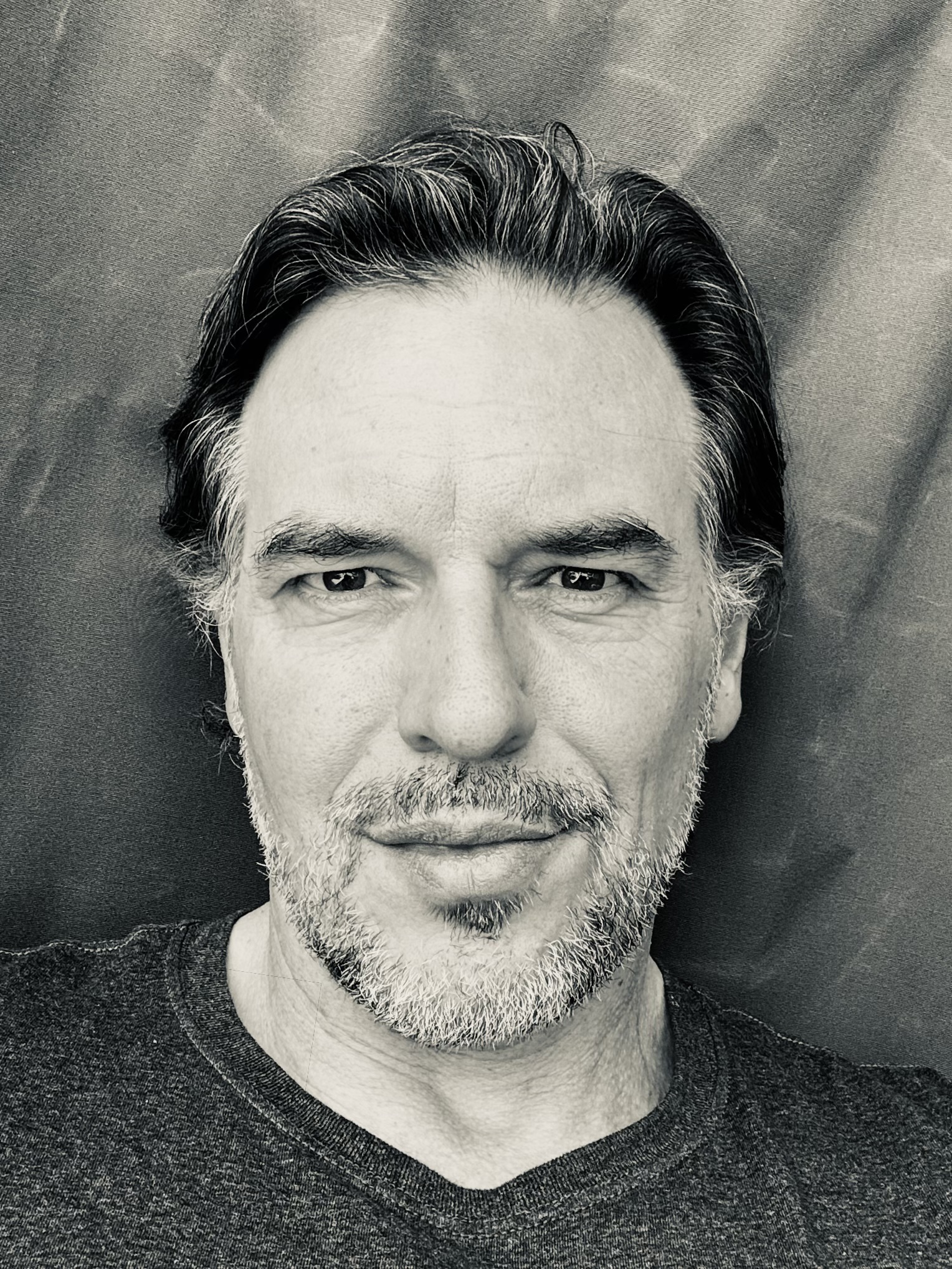
D. James “DJ” Jones is a co-founder of the New Statecraft Institute, where he serves as Chief Operating Officer and oversees organizational development, strategy, and partnerships. He returned to politics and policy in 2023, after more than two decades in law, finance, and academia with an emphasis on public-private partnerships and impact philanthropy. His public-service experience includes work for Rep. Bill Goodling (R-PA), Sen. Jim Webb (D-VA), the National Endowment for Democracy, and Public Counsel Law Center. He holds degrees from the University of Virginia and UCLA School of Law. Mr. Jones is also a Senior Advisor to Resonant Public, a Washington, D.C.–based public affairs firm.
Publications
Our COO is featured in the October 15th edition of The Fulcrum.
Shortform insights from the Institute.
Selective writings from the Institute.
Collaborations
New Statecraft Institute contributed selective policy planks to this non-partisan endeavor.
A project of the nonpartisan Committee for a Responsible Federal Budget, FixUS convenes leading academics and intellectuals from across the ideological spectrum to analyze the dynamic forces driving our democracy’s foundational issues.
A non-partisan coalition of organizations working to bridge divides in our country to reduce toxic polarization and build social cohesion.
Your contribution to New Statecraft Institute sustains our independent analysis of federal policy — equipping transformative leaders to restore citizens’ trust in government through bold and achievable reforms.
Yes. New Statecraft Institute is a registered public charity to which contributions are tax-deductible to the extent allowed by federal law. For more information refer to IRS Publication 526.
Your contribution will go to the Institute’s General Fund unless specified otherwise (i.e., to the Transformative Leadership Initiative). The General Fund supports Institute staff who provide independent research and analysis, and publishes and distributes Institute work-product. To designate another purpose, email giving@newstatecraft.org.
Yes. Volunteers and interns assist with editing policy briefings and managing resource materials (remote or at DC / Pasadena offices). Email research@newstatecraft.org.
Yes. In-kind donations that assist digital resource management are welcome. Email giving@newstatecraft.org.
Yes. Naming opportunities for projects or staff positions are available. Email giving@newstatecraft.org.